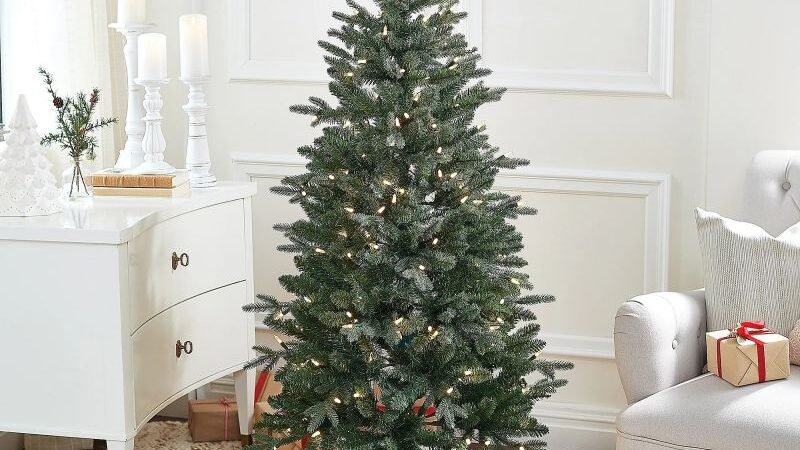
Artificial Christmas Tree Buying Guide
Choosing the right artificial Christmas tree can be more complicated than it first appears. With different materials, shapes, sizes, lighting options, and price levels available, it is important to understand the key differences before making a decision.
Whether you are buying a tree for your home, preparing a retail collection, or sourcing Christmas trees for wholesale, this guide will help you understand the most important factors to consider.
1. Choose the Right Tree Material
The material used to make the branches has a major influence on the appearance, durability, and price of an artificial Christmas tree.
PVC Christmas Trees
PVC is one of the most widely used materials for artificial Christmas trees. PVC needles are typically made from cut plastic strips and offer a traditional Christmas tree appearance at a competitive price.
PVC trees are often a practical choice for:
- Retailers looking for affordable products
- Large-volume wholesale programs
- Commercial seasonal displays
- Customers with a limited budget
PE Christmas Trees
PE trees use molded branches designed to reproduce the shape and texture of natural evergreen branches. They generally provide a more realistic appearance than traditional PVC trees.
PE trees are particularly suitable for:
- Premium retail collections
- Customers looking for realistic trees
- Higher-end home decoration
- Hotels and commercial displays
Mixed PE & PVC Trees
Many artificial Christmas trees combine PE and PVC branches. PE is often used on the outer sections of the tree where realism is most visible, while PVC can be used inside the tree to provide fullness.
This combination offers a balance between appearance and cost.
2. Select the Right Tree Height
Tree height is another important consideration.
Common residential sizes include:
- 4–5 ft
- 6 ft
- 7 ft
- 7.5 ft
- 8 ft
- 9 ft
For commercial applications, artificial Christmas trees can be much larger.
When choosing a tree, remember to consider the height of the ceiling as well as the space required for the tree stand and top decoration.
A tree that looks perfect in a showroom may feel too large in a small living room, while a tree that works well in an apartment may look undersized in a hotel lobby.
3. Consider the Tree Shape
Artificial Christmas trees are available in many different shapes.
Full Christmas Trees
Full trees provide a traditional, abundant appearance and are suitable for large living rooms, retail displays, and commercial environments.
Slim Christmas Trees
Slim and pencil trees require less floor space and are particularly useful for apartments, offices, hallways, bedrooms, and smaller retail spaces.
Upside-Down or Specialty Shapes
Some markets also use unusual or decorative tree shapes for themed displays and special events.
When selecting a shape, consider both the available floor space and the visual effect you want to create.
4. Decide Between Pre-Lit and Unlit Trees
A pre-lit Christmas tree comes with lights already installed, making setup faster and more convenient.
Pre-lit trees may use different lighting technologies, including LED systems and traditional lighting systems.
Consider:
- Light color
- Number of lights
- Lighting modes
- Wire arrangement
- Power connection
- Replacement options
- Safety requirements
For customers who prefer flexibility, an unlit tree allows them to select and arrange their own lights.
5. Think About Flocked Christmas Trees
Flocked Christmas trees are designed to create the appearance of freshly fallen snow.
They are especially popular in markets where customers want a winter or snowy Christmas theme.
When evaluating a flocked tree, consider the density and appearance of the flocking, the consistency of the finish, and how well the flocking remains attached during handling and transportation.
6. Check Branch Density and Construction
A good-looking artificial Christmas tree is not determined by material alone.
Pay attention to:
- Branch density
- Tip count
- Branch structure
- Hinge construction
- Center pole
- Tree stand
- Branch flexibility
- Overall symmetry
A higher tip count does not automatically mean a better tree. The structure and arrangement of the branches also affect how full and natural the tree looks after shaping.
7. Consider Packaging and Storage
Packaging is particularly important when purchasing artificial Christmas trees for wholesale.
A well-designed package should protect the tree during transportation while making efficient use of container and warehouse space.
For long-term use, customers should also consider how the tree will be stored after the holiday season.
A suitable storage bag or box can help protect the branches and keep the tree organized until the following Christmas.
8. Think About Your Market
There is no single “best” artificial Christmas tree for every customer.
A retailer serving a budget-conscious market may prefer PVC trees at competitive price points. A premium home decoration retailer may focus on realistic PE trees. Hotels and commercial customers may require large trees, pre-lit designs, or customized specifications.
Before choosing products, consider:
- Target customer
- Retail price
- Market preferences
- Available space
- Shipping costs
- Packaging requirements
- Expected order volume
For wholesale buyers, building a balanced product range is often more effective than choosing only one type of tree.
9. What Should Wholesale Buyers Consider?
For importers, wholesalers, and retailers, product quality is only one part of the purchasing decision.
It is also important to evaluate the supplier’s:
- Production capabilities
- Quality control procedures
- Product development experience
- Packaging capabilities
- Lead times
- Export experience
- Customization options
- Communication and after-sales service
A reliable supplier should be able to provide clear product specifications and help buyers select products suitable for their target market.
10. Build the Right Product Collection
Instead of choosing one artificial Christmas tree model, retailers can consider creating a collection covering several price and style levels.
For example:
Entry Level
PVC trees with simple designs and competitive pricing.
Mid Range
Mixed PE/PVC trees offering a balance of realism and value.
Premium
High-PE-content trees with realistic branch structures and premium finishes.
Specialty
Flocked, pre-lit, slim, commercial, or customized Christmas trees.
This approach allows retailers to serve different customer groups while creating a more complete Christmas product range.
Final Thoughts
Choosing an artificial Christmas tree is about more than selecting the right appearance. Material, height, shape, lighting, construction, packaging, target market, and budget all play an important role.
For individual buyers, the best tree is one that fits the space, style, and budget. For businesses, the decision should also consider market demand, shipping efficiency, product positioning, and supplier reliability.
Understanding these factors before purchasing can help you make better decisions and build a Christmas tree collection that meets your customers’ expectations.
If you are sourcing artificial Christmas trees for wholesale, retail, e-commerce, or commercial projects, professional product knowledge can make the sourcing process much easier.
Explore more Christmas tree guides and industry insights on ChristmasTree.cc.
Looking for a professional artificial Christmas tree supplier?
Visit Beth Light® to explore Christmas tree collections and holiday decoration sourcing solutions.